Monday October 22, 2018
Another early morning for me. Venice is such a beautiful city but it rained all afternoon yesterday and almost no photos were taken.
Today I headed towards the train station as I wanted to see what the route looked like and if we could walk instead of paying 7.50 each for a 5-minute vaporetto ride. We can, and I think I’ve convinced Suzanne we can do this and shop and stop for coffee or whatever along the way. It will be a better way to say goodbye to Venice.
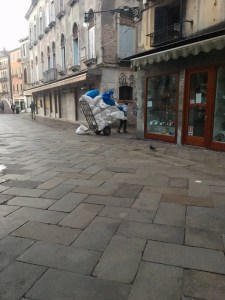
Delivery service Venice style
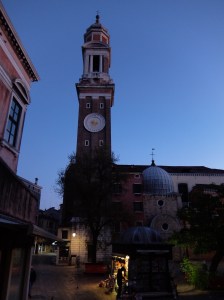
Bell towers everywhere
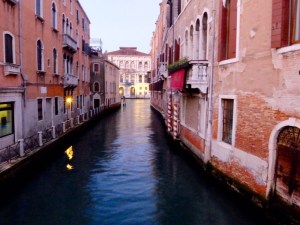
A quiet waterway
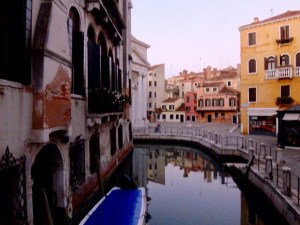
Love rounding a corner and seeing this!
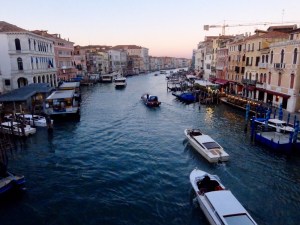
Early morning Grand Canal
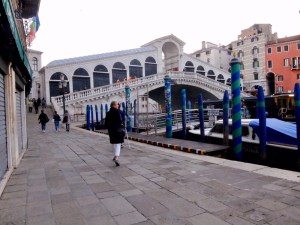
Rialto Bridge
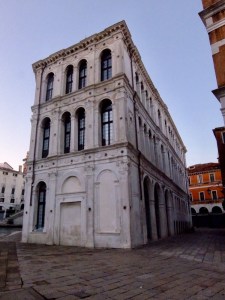


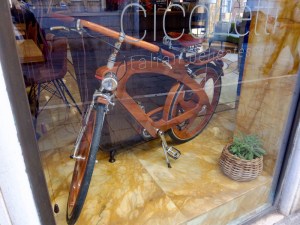
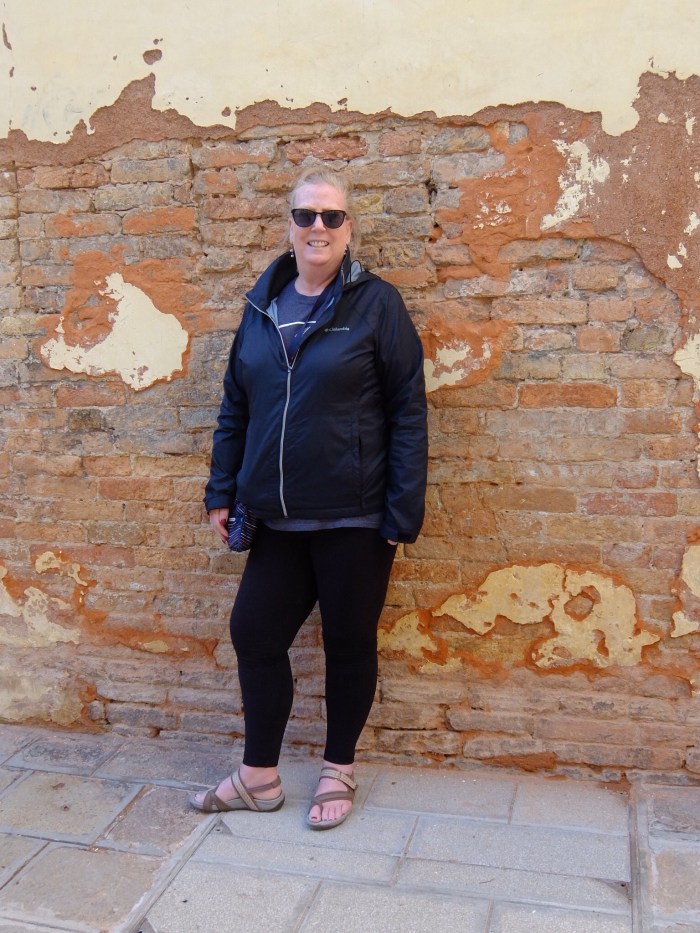
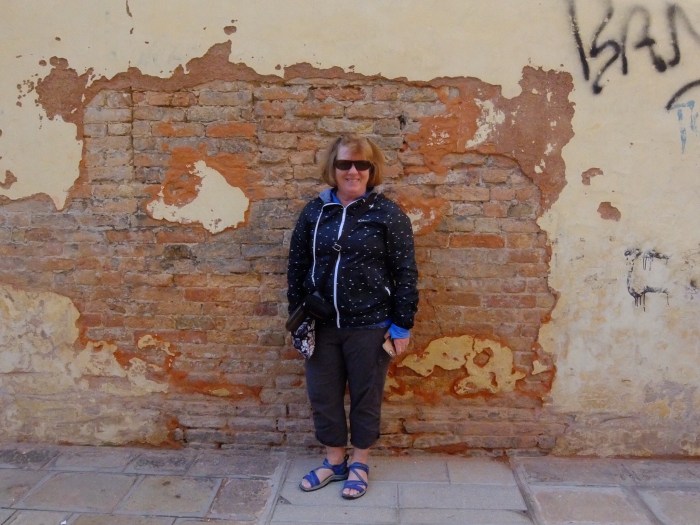
We took the same route I did this morning to shop and see what we could. I kept seeing people take photos in front of this wall, so we did too! It’s just showing that bricks do the hard work and the stucco covers it and makes it look pretty!
Then it was walking tour time. We learned a lot about how Venice began and how you build stone structures in sandy soil.
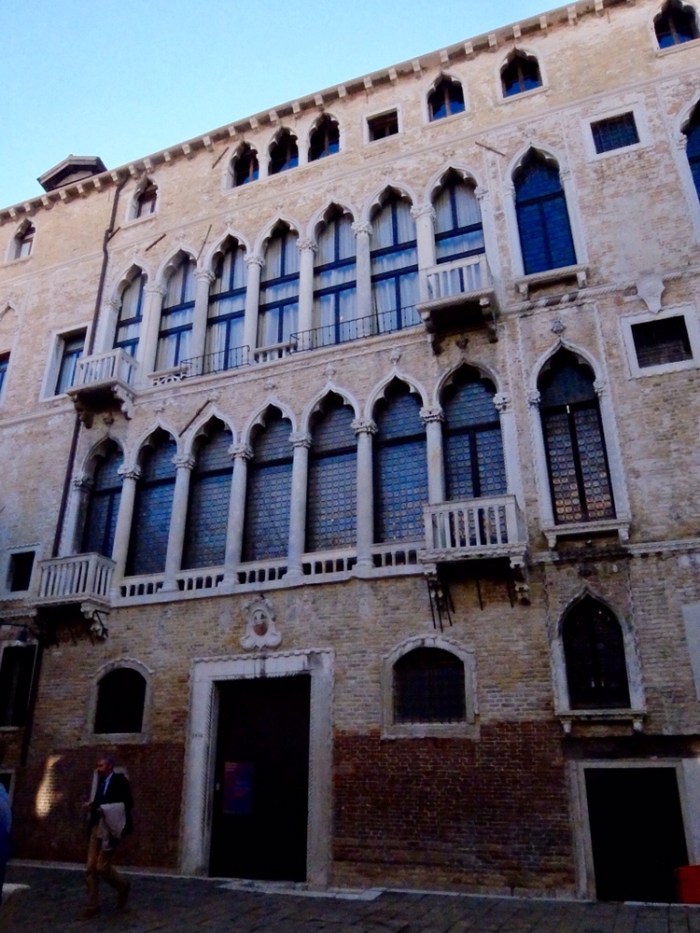
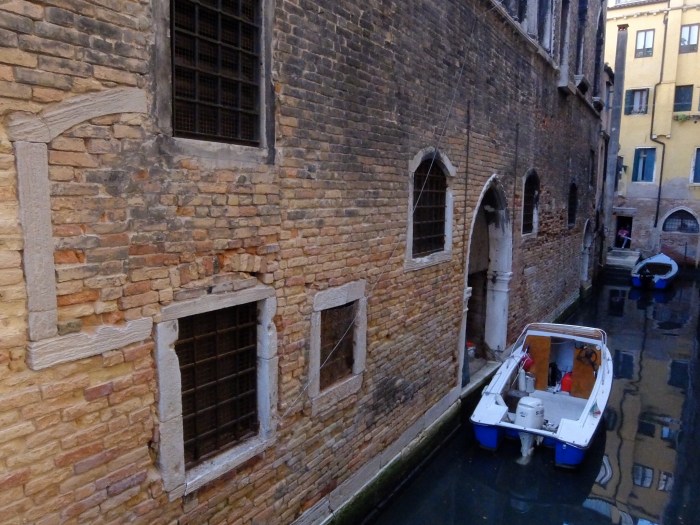
Homes and businesses were designed to have the waterway be the main entrance. On the Grand Canal the front of homes are certainly the prettier entrance but in the case below, the street side is more impressive. There were only sandy streets until the late 1800’s so it was messy. It was a boat friendly city until bridges were finally built. Then the streets began to be paved.
Below is the front and back of a building. The front is beautiful and the back functional.
The water supply was an issue always. At one point Venice’s population was 150,000 and with the rain water system in place they had no problem.
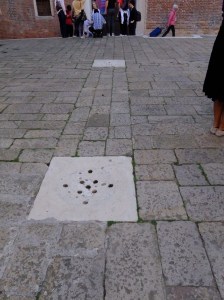
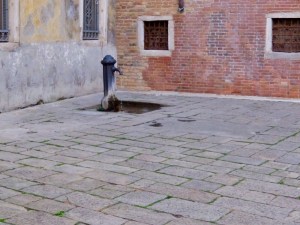
The first photo shows a raised structure. It’s like a well but not as deep because it is pulling up rain water collected. Each well had a metal lid and you would open it halfway, get your water and close it.
The second photo showing the white stones was where the rain water first fell. Underneath there was a natural filtering system with vegetation of different levels so the water would be free if debris.
Later the wells were replaced by the fountains, which still run today. But at some point around WW2 water was piped in from the mainland which tasted better, etc.

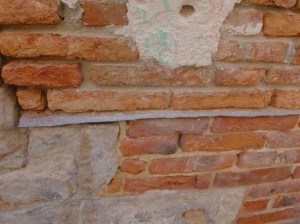
Next our guide pointed out the strip running through many of the buildings. These strips stop the water from getting to the bricks over time. Normally water, which eventually will destroy the bricks, would go as high as the second floor. If you feel the bricks above and below the strip, below is damp and above is dry. He said not every architect agrees with this method because there is some danger to the structure of the building when adding the strip. But if the building doesn’t fall down when adding the strip… then all is good!
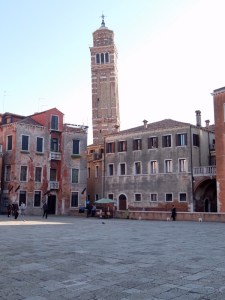
He also mentioned Venice has many bell towers and they are all leaning.
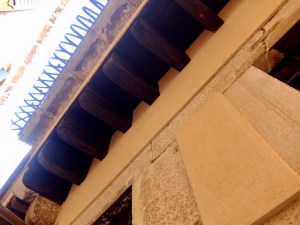
One last thing about construction. Since there was limited walking space between. Holdings, there were strict rules about dimensions. You could however add space to the inside of your home on the second or higher floors by adding wooden beams outside the building. Every little bit helped.
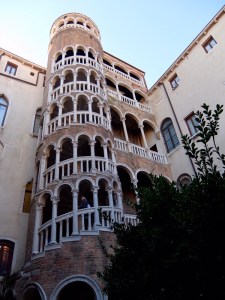
Also, there was no way to show your wealth other than by your home. This home had the only outside staircase in Venice and is quite beautiful. It was owned by the Contarini family.
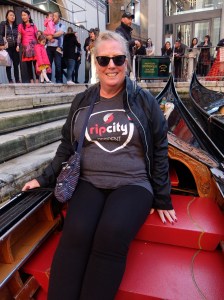
Last part of the tour was the gondola ride. Suzanne smiled the entire time! First of course we learned how gondolas were made. They are off center so the gondolier can stand. They take 6 months to hand build and cost at least 30,000 euros. The more bling added the cost could go as high as 50,009 euro. They are owned by the gondolier or perhaps the family. That is why the rides are expensive. The boats last on average 15 years up to 50 years. By then the new models are so much easier to maneuver it would be a collector piece.
You can see below how the boat is truly off center but it works!

Our ride…
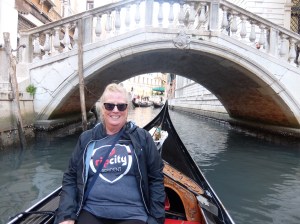
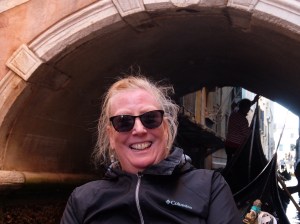
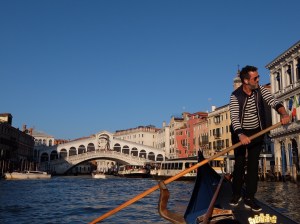

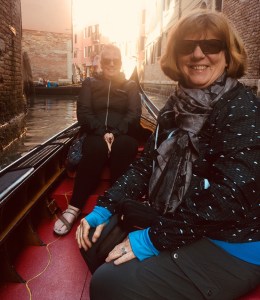
All in all it was an excellent tour topped off with a gondola ride.
Venice was a fun stop, filled with historical sights, gelato, pasta, wine, Murano glass and masks.
#enjoythejourney
 Living Life Every Day